Sobering Research on Career Outcomes
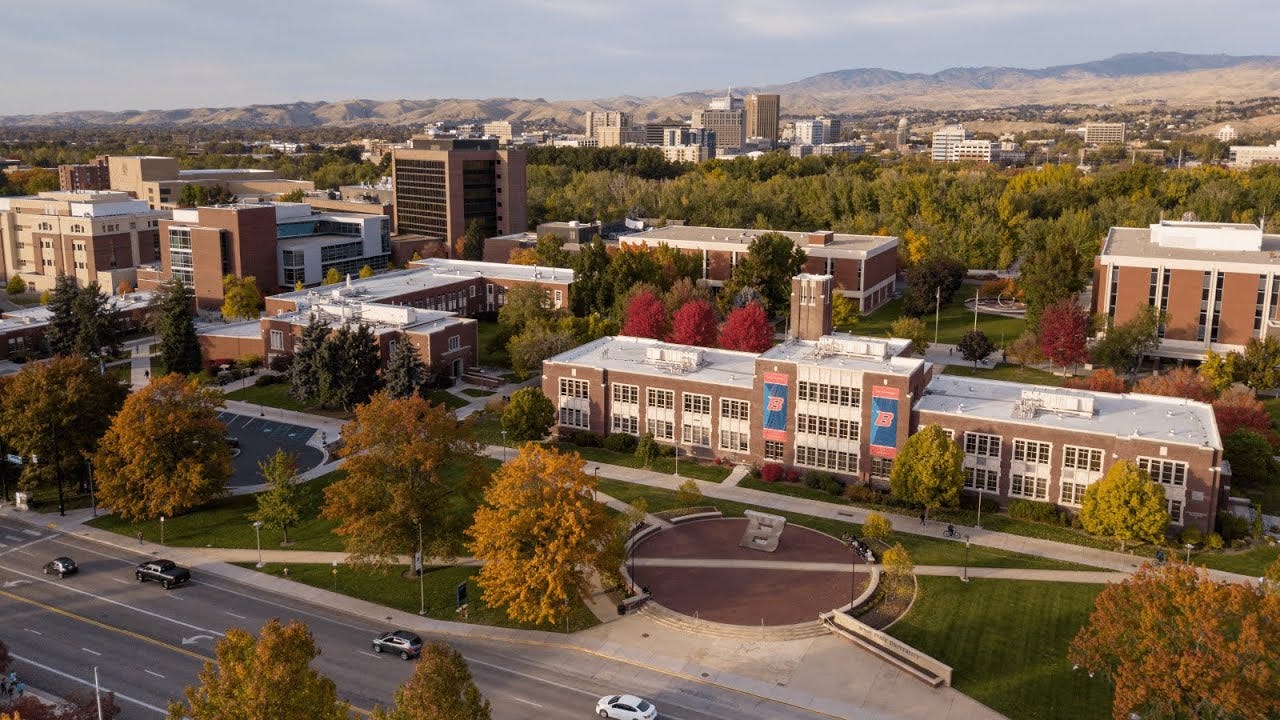
In my second semester at Boise State University, I was required to write a research paper for English 102, a core requirement for graduation. We were to decide what the research paper would be about, and I chose Career Outcomes for Theatre Arts graduates in Idaho.
Statistical outcomes were drawn from the U. S. Bureau of Labor Statistics and The Alumni Outcomes Project. I also interviewed Gordon Reinhart, a Theatre Arts professor at Boise State University.
Arts boosterism is common everywhere, urging involvement in arts programs at every education level. The advantages to students are uncontroversial, with developmental opportunities not offered in other disciplines. But the decision to join the Theatre industry after graduating from college is fraught with concerns. This professional field is characterized by limited financial returns, unstable and short-term work contracts, a willingness to commoditize one’s social presentation, and ongoing encroachment by advanced computer technology. This is not a field suitable for every person. Arts education should include frank discussions of likely career outcomes if this is to become a professional path. Given the various and obvious difficulties of maintaining oneself in the theatre industry, reliable data and potential strategies need full examination.
The arts in general tend to be promoted as a public good, as a cornerstone of culture. Often ‘vibrant culture’ is assumed to benefit whatever community is exposed to it. Theatre Arts are ancient and ubiquitous, to be found in Indian temples, modern German facilities, and within the curriculum of most American schools. But while the art itself is considered to convey cultural worth, a capitalist society often correlates value with financial remuneration. Here a discrepancy arises between assumed value and transactional value, and it is here that the serious student of Theatre Arts must assess the practicality and inner need for this kind of professional pursuit. The merit of professional involvement in Theater is not being disputed, but financial considerations should be realistically assessed by those considering this profession.
Live theater, as an industry and a career path in Idaho, is extremely limited. Recent state data from the U. S. Bureau of Labor Statistics estimates there are approximately 35–41 professional actors and 357–412 producers and directors currently employed in the state. The median wage for actors is between $18 and $25 per hour, and this pay tends to be contract-based, meaning that employment is limited to the duration of a theatrical production. Producers and Directors have more employment opportunities, with a median wage of $57,050 per year.

A mean wage between 18 and 25 dollars per hour makes actors financially comparable to hand laborers and material movers, or simple unskilled labor. Given the temporary nature of theater employment, it is not surprising that the most skilled and experienced professionals in this field still regard the profession as a hobby.
There are three theaters in Idaho with standing contracts to hire professional actors, stage managers, directors, and choreographers. These are the Idaho Shakespeare Festival, which is the largest, Boise Contemporary Theater, and Coeur d’Alene Summer Theatre. Various other state venues have labor agreements with the International Alliance of Theatrical Stage Employees. While the performers in these latter cases might be touring or a local group, the labor behind the scenes is unionized.
Professionals tend to recommend against joining a performance union in Idaho. There are limited union positions available in the state, and joining a union severely restricts the roles for which one might be eligible.
Non-union theater work is more common. However, working outside of a union subjects one to low or no pay, lack of any employment benefits, and work limited to the duration of a production or a project. One cannot expect to make a living wage outside of union protections in the theater industry.
Because these union positions are so limited in Idaho, they tend to be held for long periods of time, and may be filled from out-of-state applicants. Acquiring one of these positions might be a long-term strategy, but this does not solve short and medium term needs. A recent class at BSU held discussions with a director from The Idaho Shakespeare Festival. She mentioned that this is quite a busy time for her, and that she would be traveling to Los Angeles the next morning to audition actors for the Idaho Shakespeare Festival. One can see the difficulty of making a living as a performer in Idaho, when candidates for the largest local union theater are hired from out of state.
This situation presents a conundrum to the Idaho performer: To join the union and face restricted job prospects, or to remain outside of the union and not qualify for higher pay or benefits.
There is no danger of theater disappearing in Idaho. There are stages continually in use, particularly in educational institutions. But it is not practical, except in the rarest of circumstances, to consider theatrical performance a realistic career path in Idaho. However, teaching is a viable option. Higher education and academic administration compose the pinnacle of stability for theatre professionals in the state. These roles typically require an MFA or significant professional achievement. They tend to start between $58,000 and $65,000 per year.
Gordon Reinhart is a professor of Theatre Arts at Boise State University, with an extensive resume of theatrical experience in the United States and Europe. We sat for an interview about the Theatre Arts employment situation in Idaho. He flatly states that theaters cannot be profitable, because the live experience cannot be mass produced, as film or video might be. This is a profession, like many artistic professions throughout history, that relies on the wealth of patrons. In his current situation, the university is his patron, acting like a count or duke who says, “You can work in theater but you must also work for me.” To regard the theater industry as a source of secure employment, according to Professor Reinhart, is to misunderstand the dynamics of the theater industry. (personal communication, 2026).
Other states, and other cities tend to be destinations for those committed to working in the theatre industry. New York City is the most promising place in the United States for a stage career. Other places that might support this career path include Chicago, Minneapolis-St. Paul, Washington, DC, Seattle, and Philadelphia. But even in these more promising metropolises, a life in the theater is not considered an easy path.
The highest paying roles in the Idaho theater industry are in technical theatre and production management roles. These include lighting, set, and costume designers, stage managers, and producers. These roles require skills that are easily transferable to other industries, and can keep one engaged in the theater world.
Outside of teaching positions and technical theater roles, the career outlooks for Theatre Arts graduates can be discouraging. The industry is otherwise characterized by temporary placement, low pay, and limited opportunities. However, for a few individuals, this truly is a calling, a necessary form of artistic expression and fulfillment.
For a Theatre Arts graduate from Boise State University, the best way to secure income in Idaho is not a single job, but an employment strategy that balances stability with higher paying, short-term gigs. Because of this dynamic, the search for employment must remain ongoing. If in the scramble for employment and income, one is fortunate enough to become established in a stable theater role, then one can probably be considered a success.
It can be argued that formal education in Theatre Arts develops skills that are useful across a wide variety of fields. Theater training particularly involves collaboration, public speaking, and creative problem solving, which are highly valued in the corporate and non-profit sectors. And often, a source of income outside of Theatre is necessary to maintain one’s involvement within it.
Theater without financial profit is ubiquitous and a permanent cornerstone of our culture. Lucrative and stable employment in this field is problematic and difficult, but for the committed Theatre Arts graduate, survival in the industry is possible.