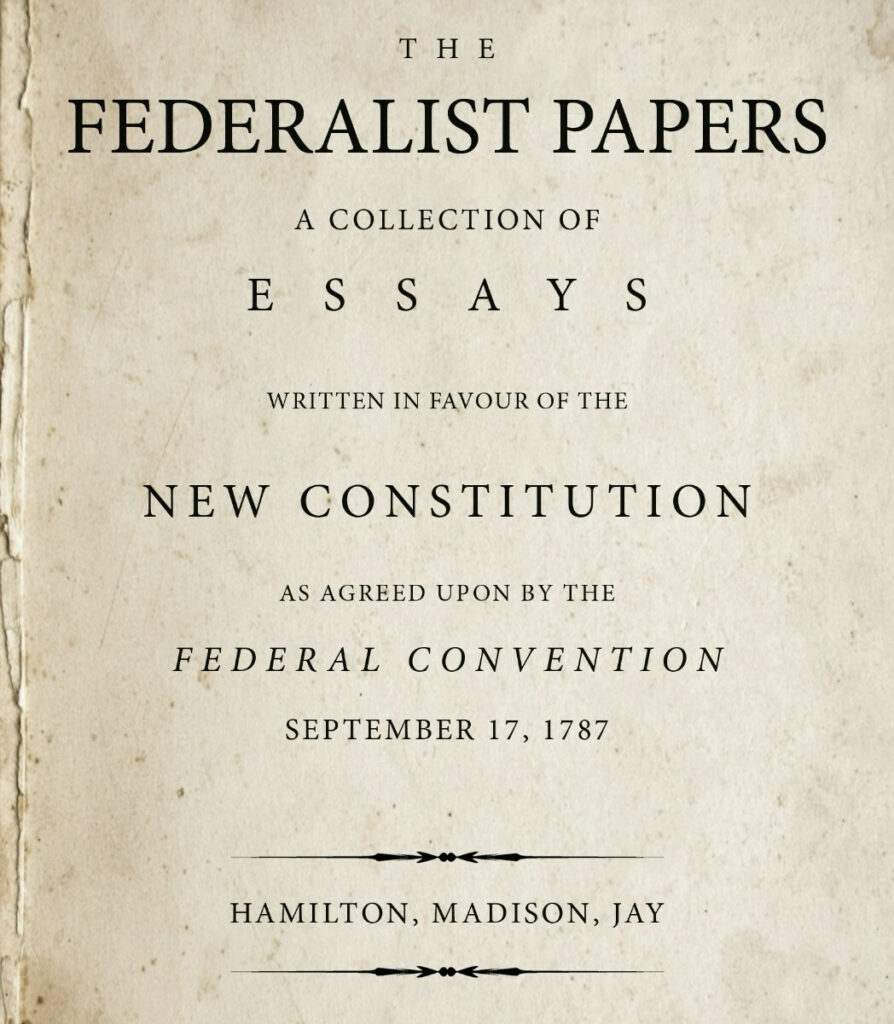
The Federalist Papers are a series of 85 essays written between October 1787 and May 1788. They were composed by three different authors: Alexander Hamilton, John Jay and James Madison, all under the single anonymous pseudonym ‘Publius’. Initially published in three New York newspapers, they subsequently appeared in newspapers across the fledgling nation. In these papers, Publius argues for implementation of the United States Constitution, which had been sent to the states for ratification in the Fall of 1787.
I made the recordings below to share with the public. Federalist Papers audio narrations copyright 2026 Michael Scherer.
2 – Concerning Dangers from Foreign Force and Influence
3 – The Same Subject Continued: Concerning Dangers From Foreign Force and Influence
4 – The Same Subject Continued: Concerning Dangers From Foreign Force and Influence
5 – The Same Subject Continued: Concerning Dangers from Foreign Force and Influence
6 – Concerning Dangers from Dissensions Between the States
7 – The Same Subject Continued: Concerning Dangers from Dissensions Between the States
8 – The Consequences of Hostilities Between the States
9 – The Union as a Safeguard Against Domestic Faction and Insurrection
10 – The Same Subject Continued: The Union as a Safeguard Against Domestic Faction and Insurrection
11 – The Utility of the Union in Respect to Commercial Relations and a Navy
12 – The Utility of the Union In Respect to Revenue
13 – Advantage of the Union in Respect to Economy in Government
14 – Objections to the Proposed Constitution From Extent of Territory Answered
15 – The Insufficiency of the Present Confederation to Preserve the Union
21 – Other Defects of the Present Confederation
22 – The Same Subject Continued: Other Defects of the Present Confederation
23 – The Necessity of a Government as Energetic as the One Proposed to the Preservation of the Union
24 – The Powers Necessary to the Common Defense Further Considered
25 – The Same Subject Continued: The Powers Necessary to the Common Defense Further Considered
26 – The Idea of Restraining the Legislative Authority in Regard to the Common Defense Considered
30 – Concerning the General Power of Taxation
31 – The Same Subject Continued: Concerning the General Power of Taxation
32 – The Same Subject Continued: Concerning the General Power of Taxation
33 – The Same Subject Continued: Concerning the General Power of Taxation
34 – The Same Subject Continued: Concerning the General Power of Taxation
35 – The Same Subject Continued: Concerning the General Power of Taxation
36 – The Same Subject Continued: Concerning the General Power of Taxation
37 – Concerning the Difficulties of the Convention in Devising a Proper Form of Government
38 – The Same Subject Continued, and the Incoherence of the Objections to the New Plan Exposed
39 – The Conformity of the Plan to Republican Principles
40 – The Powers of the Convention to Form a Mixed Government Examined and Sustained
41 – General View of the Powers Conferred by the Constitution
42 – The Powers Conferred by the Constitution Further Considered
43 – The Same Subject Continued: The Powers Conferred by the Constitution Further Considered
44 – Restrictions on the Authority of the Several States
45 – The Alleged Danger From the Powers of the Union to the State Governments Considered
46 – The Influence of the State and Federal Governments Compared
50 – Periodic Appeals to the People Considered
52 – The House of Representatives
53 – The Same Subject Continued: The House of Representatives
54 – The Apportionment of Members Among the States
55 – The Total Number of the House of Representatives
56 – The Same Subject Continued: The Total Number of the House of Representatives
59 – Concerning the Power of Congress to Regulate the Election of Members
65 – The Powers of the Senate Continued
66 – Objections to the Power of the Senate To Set as a Court for Impeachments Further Considered
68 – The Mode of Electing the President
69 – The Real Character of the Executive
70 – The Executive Department Further Considered
71 – The Duration in Office of the Executive
72 – The Same Subject Continued, and Re-Eligibility of the Executive Considered
73 – The Provision For The Support of the Executive, and the Veto Power
74 – The Command of the Military and Naval Forces, and the Pardoning Power of the Executive
75 – The Treaty Making Power of the Executive
76 – The Appointing Power of the Executive
77 – The Appointing Power Continued and Other Powers of the Executive Considered
79 – The Judiciary Department Continued
80 – The Powers of the Judiciary
81 – The Judiciary Continued, and the Distribution of the Judicial Authority
83 – The Judiciary Continued in Relation to Trial by Jury
84 – Certain General and Miscellaneous Objections to the Constitution Considered and Answered